Inclusive Education, Cultural Transformation, and the Ethical Dimensions of Learning
Date:
July 23rd, 2026 (UTC+1)
Organizer:
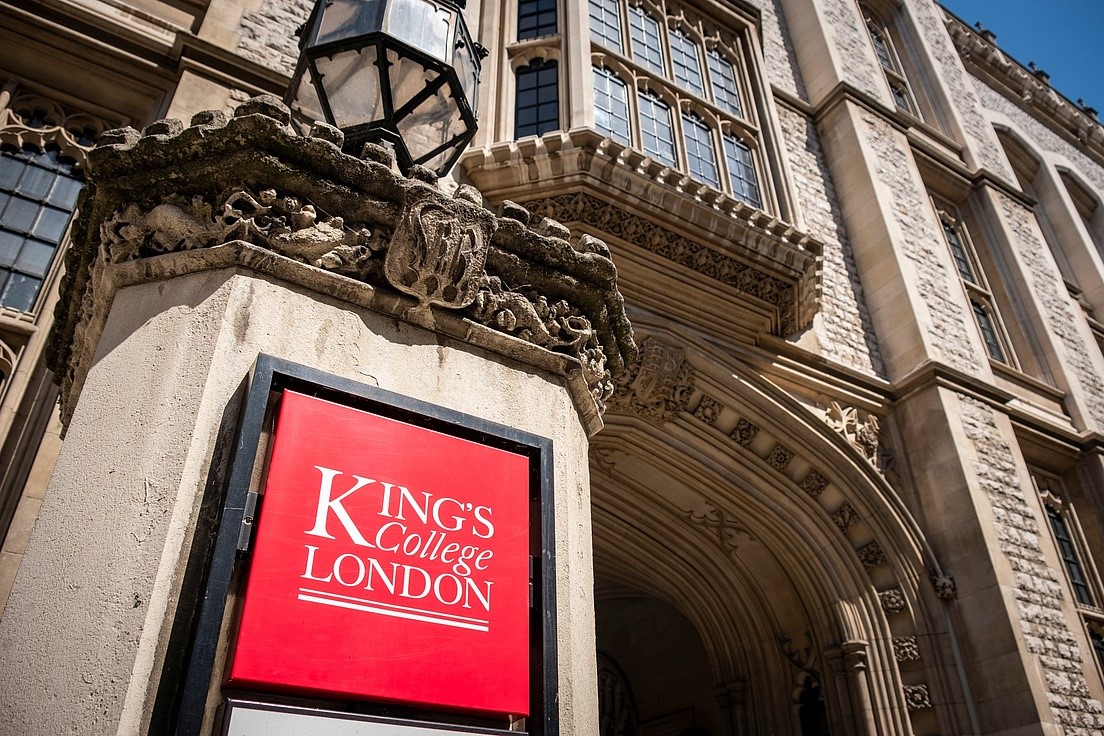
King’s College London
Symposium Chair:
Personal Bio:
Dr An Nguyen is an educator and researcher at King’s Business School, King’s College London, with a strong interest in inclusive education, cultural transformation, and the ethical dimensions of learning and teaching. Her work sits at the intersection of management education, higher education pedagogy, and organisational culture, with a particular focus on how inclusive practices are designed, enacted, and experienced by diverse learners and educators.
Dr Dang has led and contributed to multiple pedagogical innovation projects, including large-scale action research initiatives aimed at enhancing student engagement, inquiry-based learning, and equitable participation in higher education. Her research adopts qualitative, participatory, and reflective methodologies to explore lived experiences of learning, assessment, and feedback, particularly in digitally mediated and international contexts. She has published and reviewed for leading journals in management and higher education and is actively involved in academic development and mentoring.
Call for Papers
Background:
As one of the distinctive symposia of the 7th International Conference on Educational Innovation and Psychological Insights (ICEIPI 2026), Inclusive Education, Cultural Transformation, and the Ethical Dimensions of Learning symposium, hosted by King’s College London, provides participants with a platform to join the discussion. Inclusive education has become a central concern for educators and researchers responding to increasingly diverse student populations, evolving learning technologies, and heightened attention to equity and social justice. Beyond issues of access or representation, inclusion involves deeper cultural transformations in how learning is designed, enacted, and evaluated. These transformations raise important ethical questions about power, responsibility, participation, and whose knowledge is recognised within educational spaces. At institutional levels, inclusion agendas often intersect with assessment regimes, digitalisation, and performance pressures, creating tensions between values, practices, and outcomes. Understanding inclusive education therefore requires attention not only to pedagogical approaches, but also to organisational cultures, ethical decision-making, and the methods used to study learning and teaching in complex contexts.
Goal/Rationale:
This interactive workshop, hosted at King’s College London, aims to bring together educators and education researchers to critically explore inclusive education as both a methodological and a practical challenge. While inclusive practices are widely promoted, there remains limited shared understanding of how inclusion is enacted, evaluated, and ethically sustained across different educational settings. Researchers face methodological dilemmas in capturing lived experiences of inclusion, marginalisation, and cultural change, while practitioners must translate abstract principles into everyday teaching, assessment, and curriculum design.
The workshop seeks to bridge this gap by fostering dialogue between research and practice. Participants will engage with questions such as: How can research methods better reflect ethical commitments to inclusion? How do educators navigate cultural and institutional constraints? What forms of evidence meaningfully capture inclusive learning experiences? Through collaborative activities, the workshop will surface practical strategies, methodological innovations, and ethical reflections that support more inclusive and reflexive educational environments.
Scope and Information for Participants:
The workshop welcomes contributions from educators, researchers, and practitioner-scholars across educational sectors. It is explicitly methods-focused and practice-oriented, and will be highly interactive. We invite short contributions, case examples, and work-in-progress related to themes such as:
- Inclusive pedagogies and curriculum innovation
- Qualitative, participatory, and reflective research methods
- Ethical issues in assessment, feedback, and learning analytics
- Student voice, co-creation, and participatory design
- Cultural change within institutions and programmes
- Inclusion in digital, hybrid, and AI-mediated learning
- Reflexivity, power, and positionality in educational research
Sessions will combine brief inputs with small-group discussion, collaborative mapping, and shared reflection.
Topics
The main topics of this symposium are listed below.
Pedagogy- Digital Pedagogy and E-Learning
- Sports Pedagogy and Physical Literacy
- Inclusive Education and Social Learning
- Trauma-Informed Teaching
- Gamification in Education
- EdTech and Artificial Intelligence in Learning
- Mindfulness in Education
- STEM and STEAM Education
- Culturally Responsive Teaching
- Collaborative Learning Strategies
- Experiential and Cooperative Pedagogy
- Differentiated Learning Approaches
- Assessment for Learning
- Multisensory and Physical Education
- Digital Sociology
- Sociology of Climate Change
- Migration and Globalization
- AI and Society
- Sociology of Technology
- Social Media Impact
- Post-Colonial Sociology
- Sociology of Mental Health
- Inequality and Social Justice
- Gender Studies in Sociology
- Core Fields (e.g., Theoretical Sociology, Historical Sociology)
- Specialized Areas (e.g., Urban Sociology, Criminology, Rural Sociology)
- Digital Transformation in Education
- Global Education Policy Trends
- Hybrid and Blended Learning Models
- Data-Driven Decision Making in Education
- Equity and Access in Education
- Professional Learning Communities (PLCs)
- Competency-Based Education
- Adaptive and Personalized Learning
- Global Citizenship Education
- Mental Health and Well-being in Schools
- Educational Management (Autocratic vs. Democratic; Centralized vs. Decentralized)
- Primary, Secondary, and Higher Education Structures
- Professional Development in Education
- Educational Policy and Reform
- Neuroeducation and Learning Sciences
- Emotion and Motivation in Learning
- Psychology of Social Media Use
- Mental Health in Educational Contexts
- Psychological Resilience and Adaptability
- Applied Positive Psychology
- Virtual and Augmented Reality in Therapy
- Mind-Body Interaction in Sports Psychology
- Behavioral Economics and Decision Making
- Cross-Cultural Psychological Assessment
- Behavioral and Cognitive Psychology
- Developmental and Educational Psychology
- Social and Industrial-Organizational Psychology
- Epistemic Injustice
- Posthumanism
- New Materialism
- Speculative Realism
- Digital Ethics
- Affect Theory
- Decolonial Philosophy
- Neurophilosophy
- Environmental Philosophy
- Free Will and Determinism
- Ontology
- Epistemology
- Global Justice and Cross-Cultural Ethics
Meanwhile, submissions aligned with the overall conference theme are also welcome.
Sports Sciences- Exercise Physiology and Performance Optimization
- Sports Nutrition and Metabolism
- Injury Prevention and Rehabilitation
- Strength and Conditioning Techniques
- Ethics in Sports and Fair Play
- Human Kinetics and Motor Skills
- Sports Sociology and Cultural Identity
- Gender Studies in Sports
- Inclusion and Accessibility in Sports
- Mental Health in Competitive Sports
- Sports Policy and Governance
- Sports Psychology and Motivation
Submission
All submitted papers should report original and unpublished work, experimental or theoretical, and are not under consideration for publications elsewhere. All papers should be no less than 4 pages in length and must strictly follow the format of the symposium template. All papers are subject to reviews and edits. Prospective authors are kindly invited to submit full text papers that includes title, abstract, introduction, tables/figures and references. Other styles of papers are not accepted. Please submit your papers in both .doc/.docx AND .pdf formats as attachments via email to sympo_london@iceipi.org by the given deadline. It is unnecessary to submit an abstract in advance.
Publication
Accepted papers of the symposium will be published in Lecture Notes in Education Psychology and Public Media (Print ISSN 2753-7048), and will be submitted to Conference Proceedings Citation Index (CPCI), Crossref, CNKI, Portico, Google Scholar and other databases for indexing. The situation may be affected by factors among databases like processing time, workflow, policy, etc.
* The papers will be exported to production and publication on a regular basis. Early-registered papers are expected to be published online earlier.
This symposium is organized by ICEIPI 2026 and it will independently proceed the submission and publication process.
Ways to Participate
Attendance Onsite
The symposium welcomes participants to attend on-site and share the innovative experiences and researches with the group. Therefore, we provide some general information about the visa application. If you want to attend the symposium on-site, please email the symposium committee: sympo_london@iceipi.org.
VISA
Welcome to GOV.UK (www.gov.uk)
In order to ensure the information is correct and up to date, there may be changes which we are not aware of. And different countries have different rules for the visa application. It is always a good idea to check the latest regulations in your country. This page just gives some general information of the visa application.
UK Visa Information
What you need to do
- Check if what you plan to do in the UK is allowed as a Standard Visitor.
- Check you meet the eligibility requirements.
- Check if you need to apply for a visa to visit the UK.
- Apply for a Standard Visitor visa online - if you need one.
Check you meet the eligibility requirements
You must have a passport or travel document to enter the UK. It should be valid for the whole of your stay.
You must be able to show that:
- you'll leave the UK at the end of your visit
- you're able to support yourself and your dependants during your trip (or have funding from someone else to support you)
- you're able to pay for your return or onward journey (or have funding from someone else to pay for the journey)
- you'll not live in the UK for extended periods through frequent or successive visits, or make the UK your main home
Check if you need a visa to visit the UK
Depending on your nationality, you'll either:
- have to apply for a Standard Visitor visa before you travel to the UK
- be able to visit the UK for up to 6 months without needing a visa
You can check if you need a visa before you apply.
If you do not need a visa, you must still meet the Standard Visitor eligibility requirements to visit the UK. You may be asked questions at the UK border about your eligibility and the activities you plan to do.
Important Info
Proceeding Title:
Lecture Notes in Education Psychology and Public
Media
Press:
EWA Publishing,
United Kingdom
ISSN:
2753-7048 (Print)
2753-7056 (Online)
Important Dates:
Symposium Date
July 23, 2026
Submission Deadline
July 16, 2026
Notification of Acceptance
7-20 workdays
Template:
Email:
Fees:
Registration Fee
USD 450 (cover 6 pages)
Additional Page
USD 40/extra page
Venue:
London, UK
King’s Business School, King’s College London, Bush House, 30 Aldwych, London WC2B 4BG